

On Sundays—we study the sun!
As some of you may know, I’ve started using Substack for my philosophy and spiritual writing, as it feels right to have a platform separate from the mental health side of things for this deeper work. I’ll still be keeping up my work here-but feel free to tag along with my journey over on Substack if you are so inclined!
Today, I started with my Sun studies, and ended up writing an essay on the Garden of Eden, Heaven & Hell and the Ego & Karma, plus my take on how the chakras and the Sun’s seasons fit into all of that.
But now that I’ve spilled all of that out of my head—back to my general solar deity work. I’m happy to take you along today’s journey with me!
Basic Sun Symbolism
Symbolism of the Sun is often centered around masculine energy, healing, abundance, confidence, and vitality. It is yang energy. Fire. Action. Success.
In relation to astrology, in signifies the planet of who you generally are, your happiness—and your ego. This means whatever sign your sun is in will likely play quite a big part in your general energy—yes, I am a textbook Pisces.
By tapping into the journey of the Sun as it moves through the planets, and deepening your connection to how we have interpreted this solar entity over our thousands of years of existence, we can create a personal practice in relation to sun deity work.
Honouring Solar Deities
Solar deities have been worshipped for thousands of years, and their symbolism dates back as far as our earliest societies. From Mithra, ancient Iranian God of the Sun; to Ra, the Egyptian God of the Sun; to Helios, the Greek God of the Sun; to Sol, the Norse Goddess of the Sun and later Roman Sun God.
And it makes perfect sense, really. What have all of those civilizations had in common regardless of their interpretation of it? Nature. The Cosmos. The Sun and Moon.
As I covered in a lot more detail in my Garden of Eden essay, even Christianity has roots in the worship of the Sun—Son—of God. The equal-armed cross representing the four seasons (or four gospels) as the Life of the Sun/Son across numerous religions, philosophies and civilizations—more on this later.
How can I work with solar deities?
Deity work is so vastly personal, so I can’t tell you how to honour any deity, but study is a great place to start! Honour your own intuition, trust what you’re drawn to and what practice aligns with that.
As for my own spiritual practice, I largely use research, poetry, and art magick. Although I also do a lot of candle work! Sundays can be a great day to utilise candle magick, as they are both aligned with the fire element and can help to enhance our Will.
By tapping into ideas, philosophies and themes related to these Gods, we can begin to work with that energy in our own lives. That usually culminates in written and art spell-work for me.
I can then use that spell as a totem to remind me of the energy I want to tap into when I need it. I might meditate on it, do a yoga practice around it, charge my bath with it, chant it, etc.
My magical practice honouring Helios
The last couple of weeks, my Sunday solar practice has looked like dedicating some time to Helios; reading and listening to mythology and essays; and mapping how his energy could help me tap into an energy of healing, success, divine masculine strength, and celebration in my own life.
For example, mythology relating to Helios depicts him as the God of the Sun with a shining crown, who drives the Sun across the sky from East to West each day in a golden chariot. He is the guardian of truth and sacred light/sight, who sees and hears all and makes great sacrifices to maintain truth and balance.
He is brother to Selene (the Moon) and Eos (the Dawn)—and when he reaches the end of his journey, he is said to climb out of his chariot and into a boat to sail back East across the sea and prepare for his journey the next day.
After researching and deepening my understanding of this Greek deity, my practice moved into creativity and written spell-work, which I have used on Sundays as described above.
Here’s my Sun Day spell, created in honour of Helios, God of the Sun.
A Sun Day Spell
Oh sun, divine, with wilderness and light,
On your day of worship, I honour your drive:
A chariot’s journey across the sky; a sacred sight,
With the shine of your crown creating day and night.
From East to West, as you move, may you bless,
My days with abundance and physical strength.
With magickal fire, shine on my success—
And I’ll use your heat to act and to cleanse.
With divine fire on my side, healing through alchemy,
All my actions are vitalised—I will it so. So mote it be.
Working With the Sun Phases (Seasons)
As we have discussed, the Sun is always transforming; never static. As are we.
Symbolism of the equal-armed cross goes back further than I can even contemplate and stretches across numerous vastly different ideologies. This symbol illustrates many things to different groups, but going back to Pagan times, it has held meaning as the four seasons (or later the four gospels) as the Life of the Sun/Son.
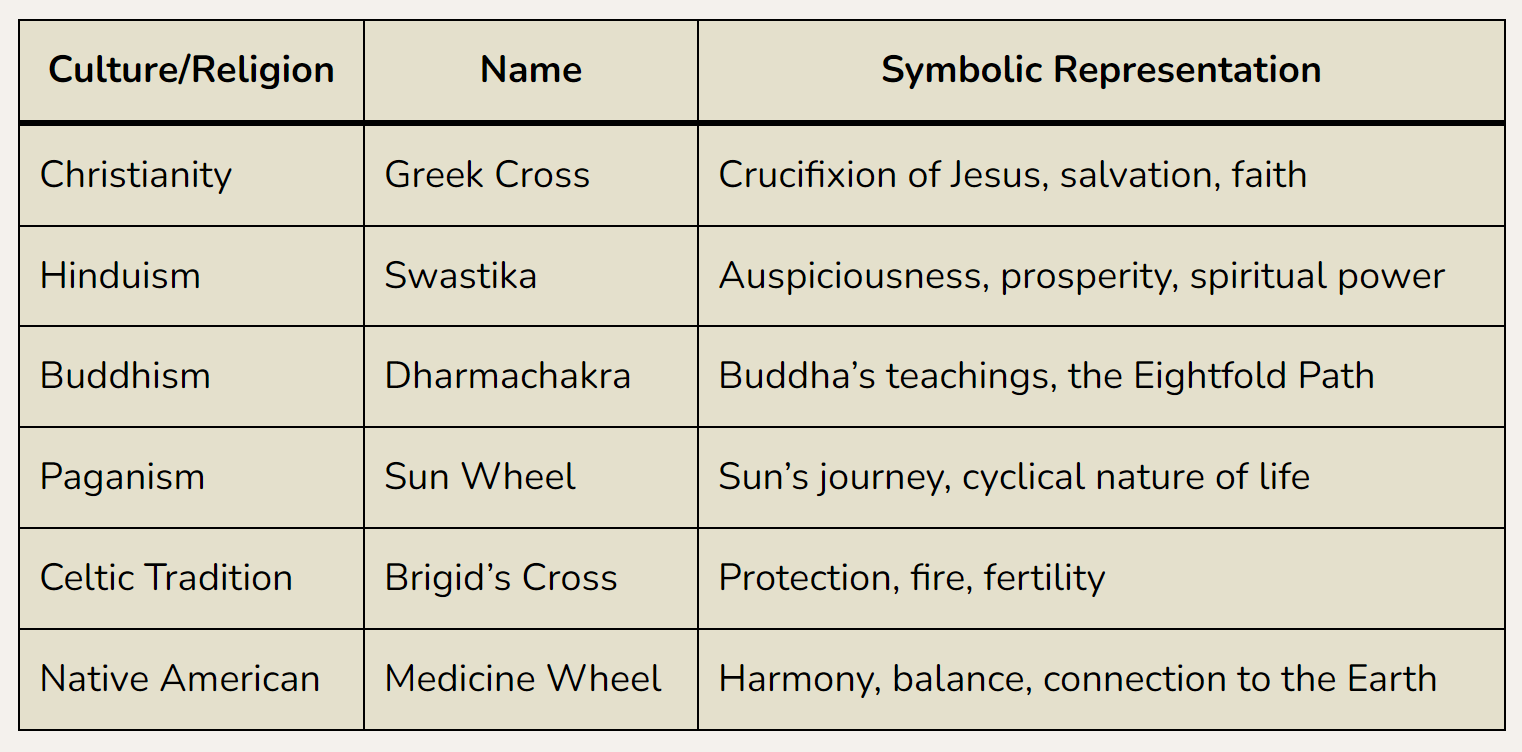
This widespread symbolic significance makes it a natural extension of solar deity work to look at the Sun’s life ‘phases’ (the seasons) and how we can relate to these energies, also.
Understanding Astronomy: The Sun & the Seasons tells us:
- In late March and late September (at the “equinoxes”), the sun’s path follows the celestial equator. It then rises directly east and sets directly west. The exact dates of the equinoxes vary from year to year, but are always near March 20 and September 22.
- After the March equinox, the sun’s path gradually drifts northward. By the June solstice (usually June 21), the sun rises considerably north of due east and sets considerably north of due west. For mid-northern observers, the noon sun is still toward the south, but much higher in the sky than at the equinoxes.
- After the June solstice, the sun’s path gradually drifts southward. By the September equinox, its path is again along the celestial equator. The southward drift then continues until the December solstice (usually December 21), when the sun rises considerably south of due east and sets considerably south of due west. For mid-northern observers, the noon sun is quite low in the southern sky.
- After the December solstice, the sun’s path drifts northward again, returning to the celestial equator by the March equinox.
If we translate that into the symbolism of these movements, we get the symbolism of the yearly seasons, which we can use as a sort of guide to themes of development throughout the year.
- Spring: In blossom, flourishing, signs of vitality and growth, the peak of youth.
- Summer: What was once a blossom may now become a fruit, ripening, maybe time for harvest, the heat of life, maturation of capacities & production, vibration.
- Autumn: Leaves start to change colour, trees begin process of letting go, simplifying, shedding.
- Winter: Trees do not die in Winter; life force returns to the roots of the tree, retreats within, inward, deep, grounded rooted, once rejuvenated can prepare for next cycle.
Working with the current Sun phase
So if we are working with the Life of the Sun, this means we are less than a month away from Winter Solstice—or the start of Winter.
Aligned rituals for this seasonal transit might look like grounding practices, introspection, shadow work, cord-cutting rituals, and rituals for deep, safe, rest. (Restorative yoga, anyone?)
I hit my mat the other evening and in the whole hour I was practicing I barely moved off the floor—my body needed to ground, stretch, release and deeply restore.
This might also apply to your social life. Even with the modern pressures of the Christmas period from a social perspective, honour your own seasons with the Sun, and assess where your energy needs to be directed.
That might mean pivoting the types of social activities you do to incorporate warmth, rest and healing, or it might mean a bit more solitude for a couple of months whilst you bring your life force back to your roots, and use the Winter sun to shine a light onto your shadows.
How are you working with solar energy? Do you have a seasonal practice? Let me know!

 Eliza Blooms