

Anxiety can feel overwhelming, but with the right tools and techniques, you absolutely can learn to navigate it more effectively. Taking inspiration from various therapy modalities, including Dialectical Behaviour Therapy (DBT), Cognitive Behavioural Therapy (CBT), and mindfulness practices, I’ve put together a set of practical tips to help you manage anxiety more mindfully.
Each tip is designed to help build emotional regulation skills and coping mechanisms around anxiety, helping you take more control over your actions in the face of it. First, let’s start with some basics.
Why Therapy Skills Work For Managing Anxiety
If managing anxiety-based actions or improving your anxiety levels is your goal, therapy skills provide a step-by-step guide for learning how to do this. Therapeutic approaches like the dialectic approach and cognitive behavioural approaches have been developed over years to address the intricate nuances of managing emotions, which includes anxiety management.
By understanding the root causes and triggers of anxiety, as well as the consequences of acting on our anxious urges, therapy equips us with practical tools and strategies that help us to effectively navigate and cope with symptoms – and distress.
How therapy helped me regulate my anxiety levels
In my year of DBT therapy as part of my BPD recovery treatment plan, DBT Mindfulness (and all of the other skills) played a key role in helping me regulate my anxiety levels and reducing unhelpful coping strategies like drinking, avoidance and people-pleasing.
By incorporating mindfulness practices into my daily routine, I learned to observe my thoughts, urges and emotions with less judgement, including how anxiety feels in my body, what urges tend to come with it, and the skills to evaluate whether it’s effective or not for me to act on those urges and if I need some emotional regulation skills to get through the thing.
Through mindfulness activities and therapy exercises like the ones worked into my tips below, I developed the ability to stay grounded in the present moment, even when uncomfortable, and manage my anxiety more effectively.
14 Therapy-Inspired Tips To Help You Manage Anxiety
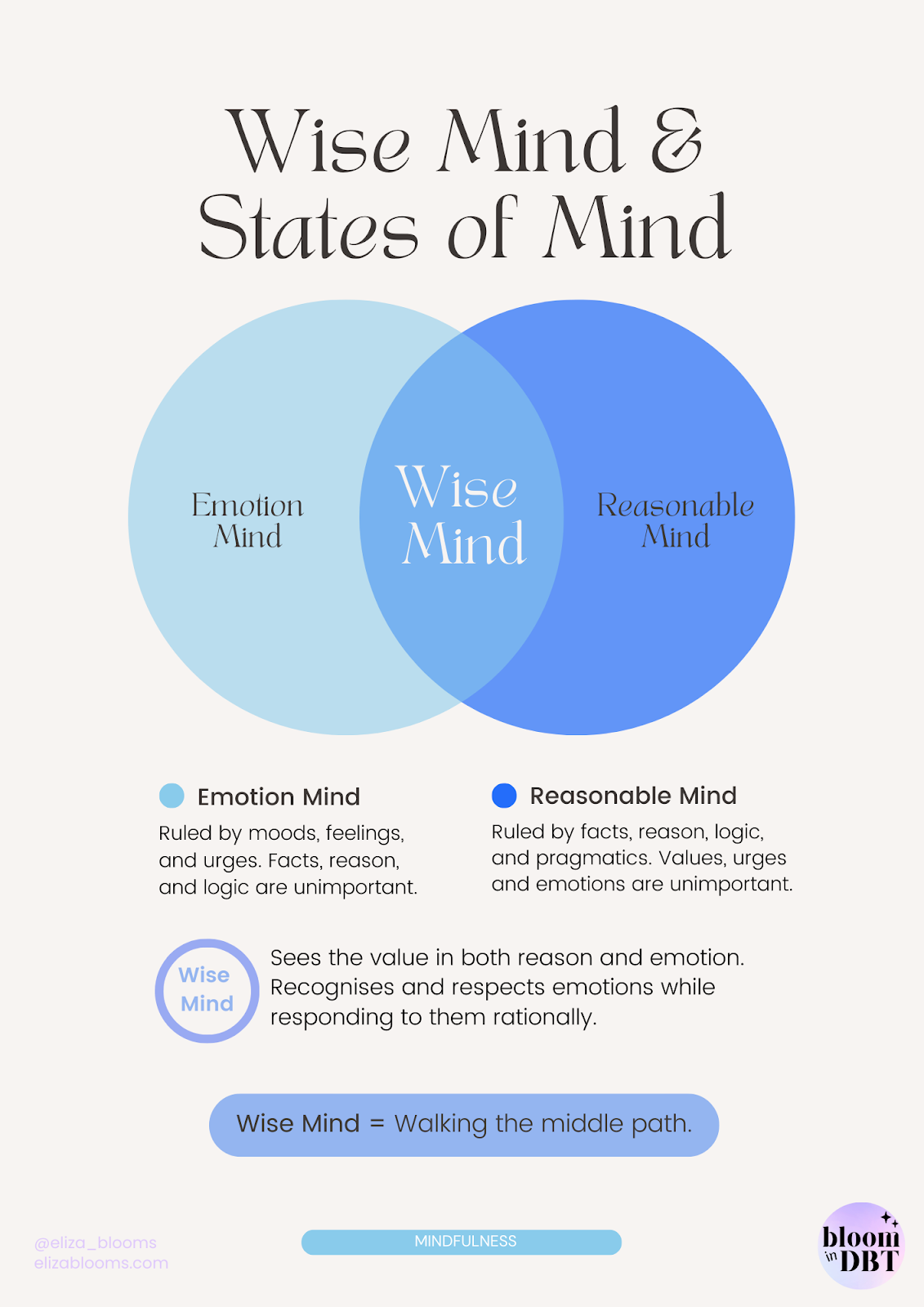
Notice Your State of Mind (& Embrace Wise Mind!)
Wise mind is the harmonious balance between our emotional and rational minds, where decisions are made taking into account both emotion and logic, not letting one overpower the other. Pay attention to the signs indicating whether you’re in emotion mind or reasonable mind. Keep a journal of these signs to recognise patterns and triggers.
For example: ‘Signs I am in emotion mind include: racing thoughts, racing heart, knot in stomach, urge to hide, urge to avoid, tears in my eyes. If I notice all of this in my body and mind, I can take a second to consider whether my impulsive urge is effective or not.’
Wise mind can also mean a number of things from a spiritual perspective. From wise mind as a contemplative practice, or as simple ‘experience’, to wise mind from the perspective of mysticism, or as intuition, whatever feels right to you is a great place to start.
Try Chain Analysis
Chain analysis is a technique used in DBT and other therapies to understand the sequence of events leading up to an emotional reaction, and the consequences of any ineffective behaviours.
Start by identifying a recent action that might not have been so effective that was triggered by anxiety. (For example: ‘Drank too much at work event’) Then, trace back the chain of events, thoughts, and emotions leading up to that action urge and action. (For example: ‘Didn’t sleep well > forgot to eat > didn’t like how I looked > felt anxious > felt more anxious when I arrived > thought that a drink, and then more, would help > felt more anxious the next day.’)
By dissecting the chain, you can gain insight into the specific steps that played into your decision to act the way you did, which helps you create better preventative plans for the future.
You can also use this technique to identify any consequences of maladaptive behaviours linked to your anxiety. For example, I struggle a lot with avoidance when I feel anxiety. Chain analysis has helped me identify the pros and cons of acting on my avoidance urges, so I can act more effectively (and in line with my long-term goals) even when the emotion of anxiety is there.
Incorporate Grounding Techniques
Grounding techniques are effective tools for managing anxiety by anchoring yourself in the present moment. When anxiety feels overwhelming, ground yourself using techniques such as deep breathing, visualisation exercises, or another simple mindfulness practice. Focus on sensations in your body or objects in your environment to anchor yourself in reality.
Engage in WHAT Skills
WHAT skills form the core of DBT mindfulness, encouraging observation, description, and active participation in the present moment. Practice observation by tuning into your senses.
Notice the details of your surroundings and how they impact your mood and thoughts. Describe your observations without judgement or interpretation. Fully engage in activities to be present on all levels, physically, emotionally, mentally, and spiritually.
Learn How to Self-Soothe
Self-soothing techniques can provide comfort and relief during times of heightened anxiety. Experiment with activities that bring you comfort and relaxation, such as taking a warm bath, listening to calming music, or practising gentle yoga. Find what works best for you and incorporate it into your daily routine as a form of self-care.
Use Mindfulness of Emotion
Mindfulness of Emotion involves acknowledging and accepting your emotions as they arise, rather than suppressing or avoiding them. When you notice anxiety surfacing, take a moment to acknowledge the sensations of the emotion without judgement.
Allow yourself to feel it fully, observing its physical sensations and accompanying thoughts. Label them, and let them go without acting on them. Notice how urges feel in your body, and how the intensity of the sensations ebbs and flows.
This too, shall pass.

Establish Healthy Boundaries
Setting healthy boundaries is essential for protecting your emotional well-being and reducing anxiety in relationships. Identify situations or relationships that contribute to your anxiety and set clear boundaries to protect your mental health. Communicate your needs assertively and prioritise self-care practices that promote balance and resilience. DBT Interpersonal Effectiveness skills can help with this.
Utilise Cold Water
The TIPP (Temperature, Intense Exercise, Paced Breathing, and Paired Muscle Relaxation) skill from the DBT Distress Tolerance module can help to quickly reduce intense emotions, including anxiety. Try splashing cold water on your face, holding ice cubes in your hands, or taking a cold shower to activate your body’s dive response and calm your nervous system.
Practice Mindfulness of Thought
Similar to mindfulness of emotion, mindfulness of thought encourages non-judgmental awareness of your thoughts as they come and go. Notice when anxious thoughts arise and practise observing them from a distance.
💭 Remember, thoughts are not facts. Try watching them pass through your mind like clouds in the sky, without attaching judgement, meaning or moral significance to them.
Check the Facts
On this note, you can check the facts on a number of different things to help you regulate anxiety. Irrational thoughts, core beliefs, opinions of others. You name it. Ask yourself if there is evidence to support your anxious beliefs or if you (or others) are making assumptions based on fear or past experiences. By examining the facts objectively, you can gain perspective and reduce the intensity of anxious thoughts.
Work On Mindfulness of Others
Mindfulness of Others involves being attuned to the thoughts, feelings, and needs of those around us without becoming overwhelmed or overly influenced by them. In social situations that trigger anxiety, practice mindful listening and observing the moment, rather than getting lost in thought or evaluation. Focus on understanding the perspectives of others without feeling responsible for their emotions. Remember that your worth is not determined by others’ opinions or reactions. Focus on your goals.
Try Progressive Muscle Relaxation
Progressive muscle relaxation is a relaxation technique that involves tensing and then relaxing muscle groups throughout the body. Incorporate progressive muscle relaxation into your daily routine to reduce physical tension and promote relaxation. Start by tensing and releasing each muscle group, focusing on the sensations of relaxation as you let go of tension.
Learn About Cognitive Restructuring
Cognitive restructuring is a key component of CBT, and involves challenging and reframing negative thought patterns that contribute to anxiety. When you notice yourself catastrophising or engaging in black-and-white thinking (through mindfulness practices outlined above) challenge these thoughts by asking yourself if they are rational and evidence-based. Reframe negative thoughts into more balanced and realistic alternatives.
Keep Coming Back to Self-Compassion
Self-compassion involves treating yourself with kindness and understanding, especially during times of struggle or distress. Practice self-compassion by speaking to yourself with the same kindness and support you would offer to a friend in a similar situation. Acknowledge your feelings without judgement and remind yourself that it’s okay to experience anxiety, it’s a natural part of being human.
Closing Thoughts
Managing anxiety is a journey that requires patience, self-awareness, and a willingness to explore and utilise various coping strategies. By integrating therapy-inspired tips into your daily life, you can develop the skills and resilience needed to navigate anxiety with greater ease and confidence.
Remember, you are not alone in this journey, and seeking support from professionals or loved ones can provide valuable resources and encouragement along the way. I hope this helps!
You Might Like: The Little Guide to DBT Mindfulness Skills
Get instant access to 20+ mindfulness journal prompts, full page journal templates, plus real example DBT skill journal entries from my own time in DBT training in my Little Guide to DBT Mindfulness Skills. Available for download today.


 Eliza Blooms
1 thought on “14 Therapy-Inspired Tips For Managing Anxiety”