
Originating from the pioneering work of Dr. Marsha Linehan, DBT offers a holistic approach to managing emotions, fostering resilience, and cultivating a life worth living. In this article, I’ll dive into the foundational pillars of DBT, guiding you towards a deeper understanding of its core principles and practical applications in everyday life.
What is Biosocial Theory?
At the heart of DBT lies the Biosocial Theory, a concept that acknowledges the complex interplay between biological vulnerabilities and environmental factors in shaping our emotional experiences. Individuals with a predisposition towards heightened emotional sensitivity may find themselves struggling to regulate their emotions in the face of life’s challenges.
Understanding this theory helps us recognize that emotional dysregulation is not a character flaw, but rather a direct consequence of biological and environmental influences.
What are Dialectics?
Central to DBT is the principle of dialectics, which encourages us to embrace the paradoxical, or dialectic, nature of life. Dialectics teaches us to hold seemingly contradictory truths in tension, such as acceptance and change, without succumbing to black-and-white thinking.
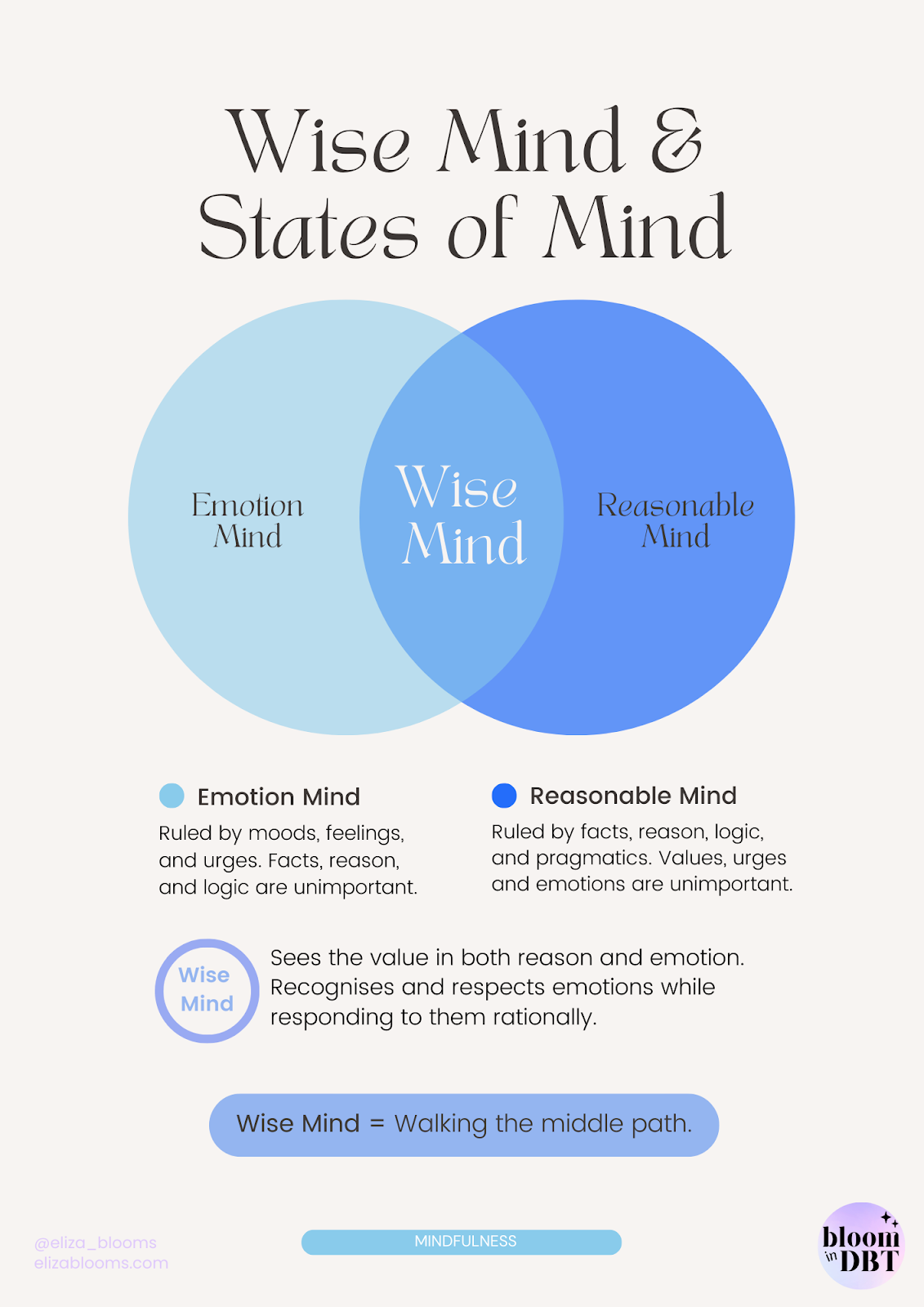
By adopting a dialectical mindset, we can navigate the complexities of our emotions and experiences with greater flexibility and openness. This is perfectly illustrated in the underlying concept of DBT Wise Mind, part of the mindfulness module of DBT.
The Four Modules of DBT
Mindfulness Skills
Mindfulness serves as the cornerstone of DBT, inviting us to cultivate present-moment awareness and non-judgmental acceptance of our thoughts, feelings, and sensations.
Through general mindfulness practices such as meditation, deep breathing, and sensory awareness, and specific DBT mindfulness skills, we learn to anchor ourselves in the present and disengage from unhelpful patterns of rumination and reactivity. By grounding ourselves in the here and now, we can develop a deeper connection to ourselves and the world around us.
Distress Tolerance
Life is fraught with challenges and setbacks, and learning to tolerate distress is a crucial skill in the DBT toolkit. Distress tolerance techniques empower us to navigate difficult situations without resorting to impulsive or self-destructive behaviours. From self-soothing strategies to distraction techniques, DBT equips us with practical tools to weather the storm and emerge stronger on the other side.
Emotional Regulation
Emotions are an inherent part of the human experience, but for some, they can feel overwhelming and uncontrollable. DBT offers a roadmap for understanding and managing our emotions more effectively, known as the Emotional Regulation module.
By learning to identify, label, and modulate our emotional responses, we can cultivate greater emotional resilience and find a sense of balance amidst life’s ups and downs.
Interpersonal Effectiveness
Healthy relationships are essential for our well-being, yet they can often be fraught with challenges and misunderstandings. DBT teaches us skills for navigating interpersonal dynamics with greater clarity and confidence. From assertive communication to setting boundaries and resolving conflicts, DBT empowers us to cultivate deeper connections and foster healthier relationships.
Conclusion
Whether you’re grappling with intense emotions, navigating difficult relationships, or seeking a deeper sense of meaning and purpose, DBT offers a roadmap for growth and transformation.
Embrace the paradoxes, cultivate mindfulness, and remember that change is always possible, one small step (or day) at a time.
Access the Real Power of DBT Mindfulness Skills with this Personal E-Book & Journal Prompts
Begin, or complement, your journey of self-discovery and healing with this 30-page digital e-book – an accessible and cost-effective guide to unlocking the potential of DBT’s Mindfulness Skills.
Crafted over 12 months with creativity and care, as I underwent a year long course of intensive DBT training, this guide goes beyond the basic clinical point of view, offering you a personalised guide enriched by real-life examples from my own journey with BPD and complex trauma recovery.


 Eliza Blooms
9 thoughts on “Exploring the Core Principles of Dialectical Behaviour Therapy”